How Long It Takes Someone to Become a Customer: The Real Timeline
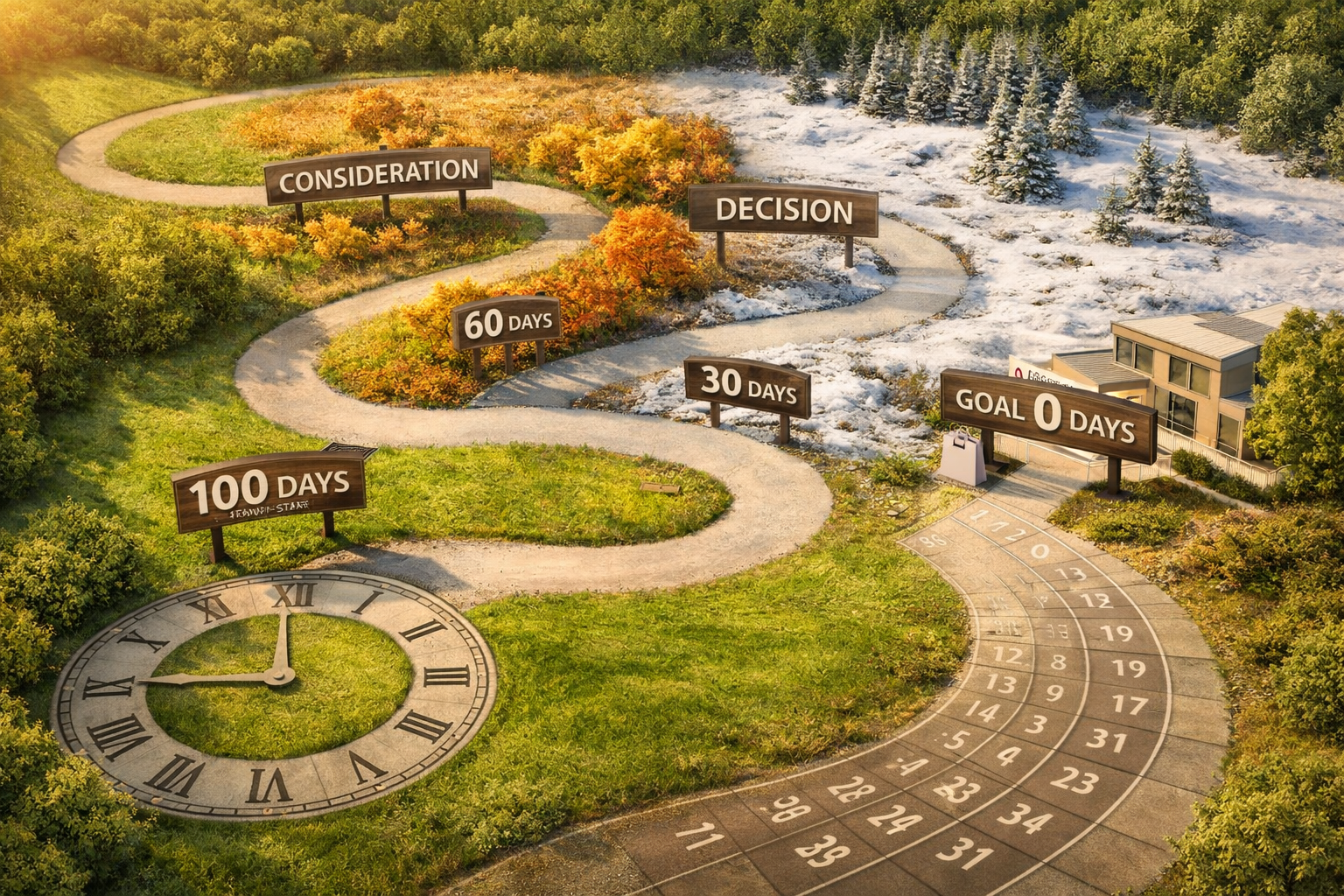
Most business owners ask the wrong question about customer acquisition. They want to know how to get customers. But the smarter question is when.
Understanding how long it takes someone to become a customer changes everything about your marketing strategy, your cash flow planning, and your sanity. If you think someone will buy after seeing one ad, you'll burn through your budget waiting for sales that never come. If you know it takes six months, you'll plan differently.
The answer isn't simple. But it's knowable.
Key Takeaways
- B2B sales cycles average 134 days in 2026, up 25% from 2022, meaning patience and sustained nurturing are essential
- 86% of B2B purchases experience delays, making predictable timelines nearly impossible without proper tracking
- Different industries and price points create vastly different conversion timelines, from days for low-cost items to months for enterprise solutions
- Tracking specific metrics like sales cycle length and CAC payback period reveals your actual customer acquisition timeline
- Your conversion timeline directly impacts cash flow, with longer cycles requiring more working capital to sustain operations
Why Knowing How Long It Takes Someone to Become a Customer Matters
This isn't academic curiosity.
Your conversion timeline determines how much cash you need in the bank. It tells you when to hire salespeople. It shapes your entire marketing budget.
Companies that misunderstand their timeline make predictable mistakes. They panic when sales don't materialize in week two. They cut winning campaigns before they've had time to work. They run out of money right before customers would have started buying.
The cost of ignorance is real.
Median SaaS companies now spend $2 in sales and marketing to acquire $1 of new annual recurring revenue.[1] The worst performers spend $2.82 for every dollar.[1] Much of this inefficiency comes from mismatched expectations about timing.
When you know your actual timeline, you can:
- Budget accurately for the waiting period
- Set realistic expectations with stakeholders
- Design nurture sequences that match decision speed
- Identify when prospects are actually stalling versus following normal patterns
The Current Reality: How Long It Takes Someone to Become a Customer in 2026
The data tells a clear story. Conversion timelines are getting longer.
For B2B companies, the average sales cycle hit 134 days in 2026.[1] That's up from 107 days in early 2022—a 25% increase in just a few years.
Think about that. Four and a half months from first contact to closed deal.
But averages hide the truth. Your timeline depends on what you sell and who you sell to.
Timeline Factors That Actually Matter
Price point is the obvious one. A $10 product converts in minutes. A $100,000 solution takes months. Nobody needs three stakeholder meetings to buy a coffee mug.
Decision complexity matters more than price sometimes. A $5,000 software purchase might take longer than a $20,000 equipment purchase if the software requires IT approval, security reviews, and integration planning.
Number of decision makers multiplies timeline. Individual consumers decide fast. Committees decide slow. 86% of B2B purchases experience delays during the buying process.[9] Delays mean someone in the chain isn't ready yet.
Industry norms create expectations. Healthcare and finance move slower than e-commerce. Regulated industries add approval layers.
Buying maturity of your market matters. If prospects already understand the problem and solution category, they move faster. If you're educating them about a new concept, add months.
Real-World Timeline Benchmarks
For e-commerce and low-ticket items (under $100), expect hours to days. Someone sees your ad, visits your site, and buys—or doesn't—within a single session or a few return visits.
For mid-market B2B software ($5,000-$50,000 annual contracts), plan for 60-120 days. This includes discovery, demos, proposal, negotiation, and internal approvals.
For enterprise sales (six-figure deals), expect 6-12 months or longer. Multiple stakeholders, formal RFP processes, legal reviews, and procurement procedures all add time.
For organic content marketing, expect 3-6 months minimum before seeing meaningful results.[1] Search engines need time to index and rank content. Prospects need time to discover, consume, and trust you.
Subscription businesses saw acquisition rates fall from 4.1% in 2021 to 2.8% in 2024.[4] Fewer prospects convert, and those who do are taking longer to decide.
How to Actually Measure How Long It Takes Someone to Become a Customer
Knowing industry averages helps. Knowing your number matters more.
Most businesses guess. They have a feeling. They remember a few recent deals. This isn't measurement—it's storytelling.
Track These Specific Metrics
Sales cycle length measures days from first meaningful contact to closed deal. Not from when they first visited your website three years ago. From when they entered your active pipeline.
Calculate it simply: Add up the days for all closed deals in a period, then divide by number of deals.
If ten customers took 30, 45, 60, 90, 120, 30, 45, 60, 75, and 90 days respectively, your average is 64.5 days. But notice the range—30 to 120 days. The average doesn't tell the whole story.
CAC Payback Period tells you how long it takes to recover what you spent acquiring a customer. This increased 12.5% at median since 2022.[1] Longer payback means your cash is tied up longer.
Calculate it: CAC ÷ (Monthly Recurring Revenue per Customer × Gross Margin %) = Months to Payback
Time to First Value measures when customers actually get results from your product. This differs from purchase date. If customers buy but don't see value for 90 days, your effective conversion timeline includes that delay.
Stage Duration breaks down your funnel. How long from awareness to consideration? Consideration to evaluation? Evaluation to purchase? Each stage reveals bottlenecks.
The Tools You Actually Need
Your analytics dashboard should track these timelines automatically. If it doesn't, you're flying blind.
CRM systems (HubSpot, Salesforce, Pipedrive) track deal progression. Set up date stamps for each stage. Run reports monthly on average time in each stage.
Marketing automation platforms track engagement over time. When did they first subscribe? When did they download the guide? When did they request a demo? These timestamps build the timeline picture.
Google Analytics shows time between sessions. Someone might visit six times over three months before buying. The session data reveals the consideration period.
Simple spreadsheets work if you're small. Track customer name, first contact date, purchase date, and days between. Sort by days to see patterns.
The key is consistency. Track the same way every time. Don't change definitions mid-year or you can't compare.
What to Do With Your Timeline Data
Knowing the number changes how you operate.
Adjust Your Marketing Budget and Timeline
If your sales cycle is 120 days, your marketing campaign needs to run at least 120 days before you judge it. Stopping at day 60 means you never see the customers who were going to convert.
Budget for the full cycle. If you need ten customers and your cycle is four months, you need four months of marketing spend before the first revenue arrives. Plan your cash accordingly.
Design Nurture Sequences That Match Reality
If prospects take 90 days to decide, what happens during those 90 days? Are you staying in touch? Are you providing value? Are you answering emerging questions?
Build email sequences, content calendars, and follow-up schedules that match your actual timeline. If deals close in 60 days, your nurture sequence should run 60-75 days with regular touchpoints.
Identify and Fix Bottlenecks
If your data shows deals stall at the proposal stage for 45 days on average, that's your problem. Not the top of funnel. Not the demo. The proposal stage.
Fix that specific bottleneck. Maybe proposals are too complex. Maybe pricing isn't clear. Maybe you're not following up enough. The timeline data points you to the exact problem.
Set Realistic Expectations
Tell your team, your investors, and yourself the truth. If customer acquisition takes five months, sales hired in January won't hit targets until June.
This honesty prevents panic. It prevents bad decisions. It keeps you from abandoning strategies that are actually working but haven't had time to prove it yet.
When you sign up for proper tracking, you're committing to reality-based decision making instead of hope-based guessing.
Common Mistakes That Extend How Long It Takes Someone to Become a Customer
Some delays are normal. Others are self-inflicted.
Overcomplicated Buying Processes
Every form field adds friction. Every required meeting adds time. Every approval layer adds delay.
Map your buying process from the customer's perspective. How many steps? How many people? How many decisions? Each one extends the timeline.
Simplify ruthlessly. Can they buy without a demo? Without talking to sales? Without filling out a ten-field form? The easier you make it, the faster they move.
Poor Lead Qualification
Talking to people who will never buy wastes time. Worse, it inflates your average sales cycle with prospects who were never going to close.
Qualify hard and early. Are they the decision maker? Do they have budget? Do they have a timeline? If the answers are no, no, and no, move on.
Your sales cycle shortens dramatically when you only count real prospects.
Inconsistent Follow-Up
Prospects go quiet. Then you go quiet. Then they forget about you. Then the cycle starts over.
Consistent follow-up keeps momentum. It doesn't mean pestering. It means regular, valuable contact that moves the conversation forward.
Set a follow-up schedule and stick to it. Every three days. Every week. Whatever matches your cycle. But consistent.
Misaligned Marketing and Sales
Marketing generates leads based on volume. Sales wants quality. Marketing thinks a download means someone's ready to buy. Sales knows they're just researching.
This misalignment adds weeks or months to your cycle. Marketing passes leads too early. Sales ignores them. Leads cool off. Everyone blames everyone.
Agree on definitions. What makes someone sales-ready? What's marketing's job versus sales' job? When does the handoff happen? Clear agreements speed everything up.
Industry-Specific Considerations for Customer Acquisition Timelines
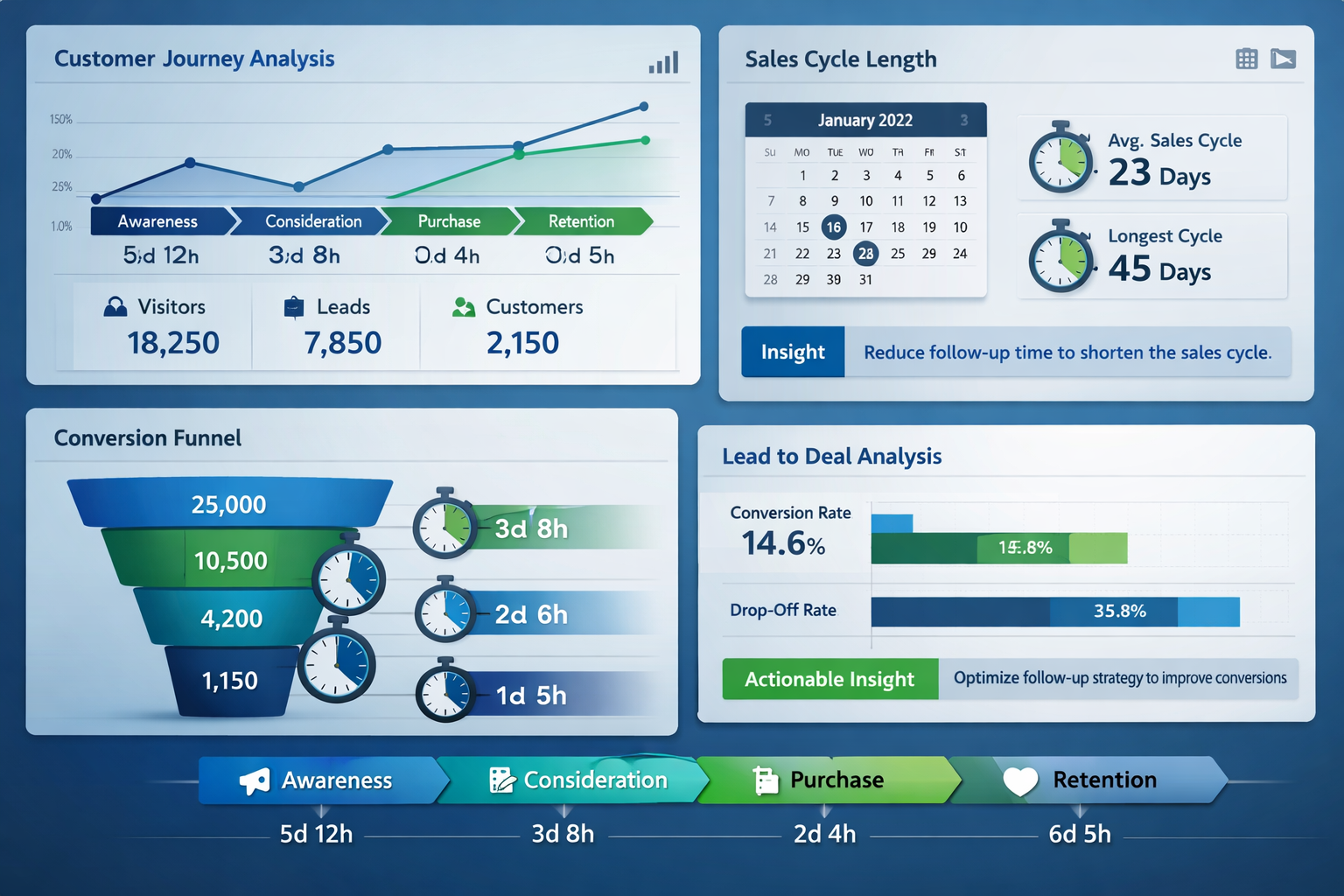
Your industry creates baseline expectations.
SaaS and software companies face the 134-day average mentioned earlier.[1] But this varies wildly by deal size. Small business SaaS might close in 30 days. Enterprise SaaS might take 300 days.
E-commerce and retail move fast—hours to days for first purchase. But lifetime value builds over months or years through repeat purchases. Your "customer acquisition" might be quick, but customer development is long.
Professional services (consulting, agencies, legal) often have long consideration periods but quick final decisions. Prospects research for months, then hire in a week when they're ready.
Manufacturing and wholesale involve long relationship-building periods. First order might take six months. Reorders might be automatic. The timeline front-loads.
Healthcare and medical face regulatory constraints, insurance considerations, and high-stakes decisions. Everything takes longer.
Understanding your industry baseline helps you know if your timeline is normal or if you have a problem. If competitors close in 60 days and you take 120, you have friction somewhere.
How to Shorten Your Customer Acquisition Timeline
Faster isn't always better. But unnecessary delays hurt.
Improve Lead Quality
Better targeting means talking to people who are actually ready to buy. They move faster because they have real need, real budget, and real authority.
Invest in better targeting before investing in more volume. Ten qualified leads beat 100 unqualified ones every time.
Reduce Friction at Every Stage
Look at each step in your process. What slows people down? What confuses them? What requires unnecessary effort?
Remove steps. Simplify forms. Clarify messaging. Make the next action obvious. Every bit of friction you remove shaves days off the timeline.
Provide Better Enablement Content
Prospects delay because they have unanswered questions. They need to convince colleagues. They need to understand implementation. They need to justify the cost.
Create content that answers these questions before they ask. Case studies. ROI calculators. Implementation guides. Comparison charts. The more you enable their internal process, the faster they move.
Use Intent Data and Signals
Modern tools identify when prospects are actively researching. They track website visits, content downloads, competitor comparisons, and buying signals.[2]
When someone shows high intent, respond immediately. Speed to lead matters. Responding in five minutes versus five hours can cut your sales cycle by days or weeks.
Optimize Your Pricing and Packaging
Complex pricing creates delays. Prospects need to understand it, compare it, and get approval for it. Simple pricing moves faster.
If your pricing requires a custom quote, a sales call, and a proposal, you've added weeks. If someone can see the price and buy online, you've added hours.
Match your pricing complexity to your deal size. Enterprise deals can handle complexity. Small deals can't.
Planning for the Long Game
Customer acquisition isn't a sprint. It's not even a marathon. It's a business process that runs continuously.
The companies that win understand their timeline and build systems around it. They don't panic when results take time. They don't celebrate too early when one deal closes fast.
They measure. They track. They improve. They plan.
Customer acquisition costs have increased 222% over the past eight years and 60% over the past five years.[1] Competition is intensifying. Timelines are extending. The businesses that survive are the ones that face reality and adapt.
Your timeline is your timeline. Not your competitor's. Not the industry average. Yours.
Measure it. Understand it. Plan for it. Then build everything else around that reality.
Conclusion: Take Action on Your Customer Timeline Today
You now know how long it takes someone to become a customer matters more than almost any other metric in your business.
You know the current reality—timelines are getting longer, costs are rising, and delays are common. You know what to measure and how to measure it. You know the mistakes that extend timelines and the strategies that shorten them.
Here's what to do next:
Start tracking today. Open your CRM or create a simple spreadsheet. Record first contact dates and purchase dates for every new customer. In 30 days, you'll have preliminary data. In 90 days, you'll have patterns.
Review your current marketing and sales processes. Where do prospects stall? What creates unnecessary friction? What questions go unanswered? Fix one bottleneck this week.
Set realistic expectations with your team and stakeholders. Share your actual timeline data. Align budgets, hiring plans, and growth projections to reality instead of hope.
Build nurture systems that match your timeline. If customers take four months to buy, create four months of valuable touchpoints. Don't go silent after the first conversation.
The businesses that thrive in 2026 and beyond will be the ones that understand their customer acquisition timeline and build their entire operation around that truth. Start measuring today. Your future cash flow will thank you.
For more resources and tools to track your customer journey effectively, visit our homepage or contact us for guidance tailored to your specific business needs.
References
[1] Customer Acquisition Cost Statistics - https://www.gtm8020.com/blog/customer-acquisition-cost-statistics
[2] Intent Data In 2026 Your Customer Acquisition Game Changer - https://speedeondata.com/intent-data-in-2026-your-customer-acquisition-game-changer/
[4] Customer Success Statistics - https://www.custify.com/blog/customer-success-statistics/
[9] B2b Buying Behavior Statistics Trends - https://corporatevisions.com/blog/b2b-buying-behavior-statistics-trends/
SEO Meta Title and Description
Meta Title: How Long Does Customer Acquisition Take? 2026 Timeline Guide
Meta Description: Discover how long it takes someone to become a customer in 2026. Learn to measure your sales cycle, reduce delays, and plan for realistic conversion timelines.
Other frequently asked questions
- How Do I Check Which Pages People Spend the Most Time On
- How Do I Track Sales From My Google Ads Campaigns
- Will AI Take Over Data Analytics
- How Do I Track Phone Calls or Email Clicks as Conversions
- How Do I Track How Many People Fill Out My Contact Form
- How Do I Track How Many People Watch a Video or Download a Brochure
- How Do I Know Which Pages Lead to the Most Conversions
- How Do I See Where Most People Drop Off During Checkout
- How Do I See Where My Website Visitors Are Coming From
- How Do I See Which Blog Posts Bring Me the Most Visitors
- How Do I Check if My Homepage Is Actually Performing Well
- How Do I Find Out How Long It Takes Someone to Become a Customer
- How Do I Find Out What Paths People Take Before They Buy or Sign Up
- How Do I Measure Which Traffic Source Brings the Most Paying Customers
- How Do I See if Discounts or Offers Increase Sales
- How to See What Visitors Do First When They Land on Your Site